Up about 6 o’clock after a poor night’s rest. Relieved about 10.15 and arrived at headquarters about noon. On parade in the afternoon for inspection before leaving Kemmel. Wrote letter at night.
All posts by Arthur Linfoot
6 November 1917; Tuesday
Up at 6 o’clock after a poor night. Only one walking case to take down. Talked a good bit with Mark Jackson. A fair number of shells came over but we managed all right.
Somersets went over the top on the left.
5 November 1917; Monday
Up about 7 o’clock. Had breakfast, packed up kit and went up the line in the car to spoil bank and then walked on to right† post. Had quiet journey up and quiet morning. Not much doing all day and no cases.
4 November 1917; Sunday
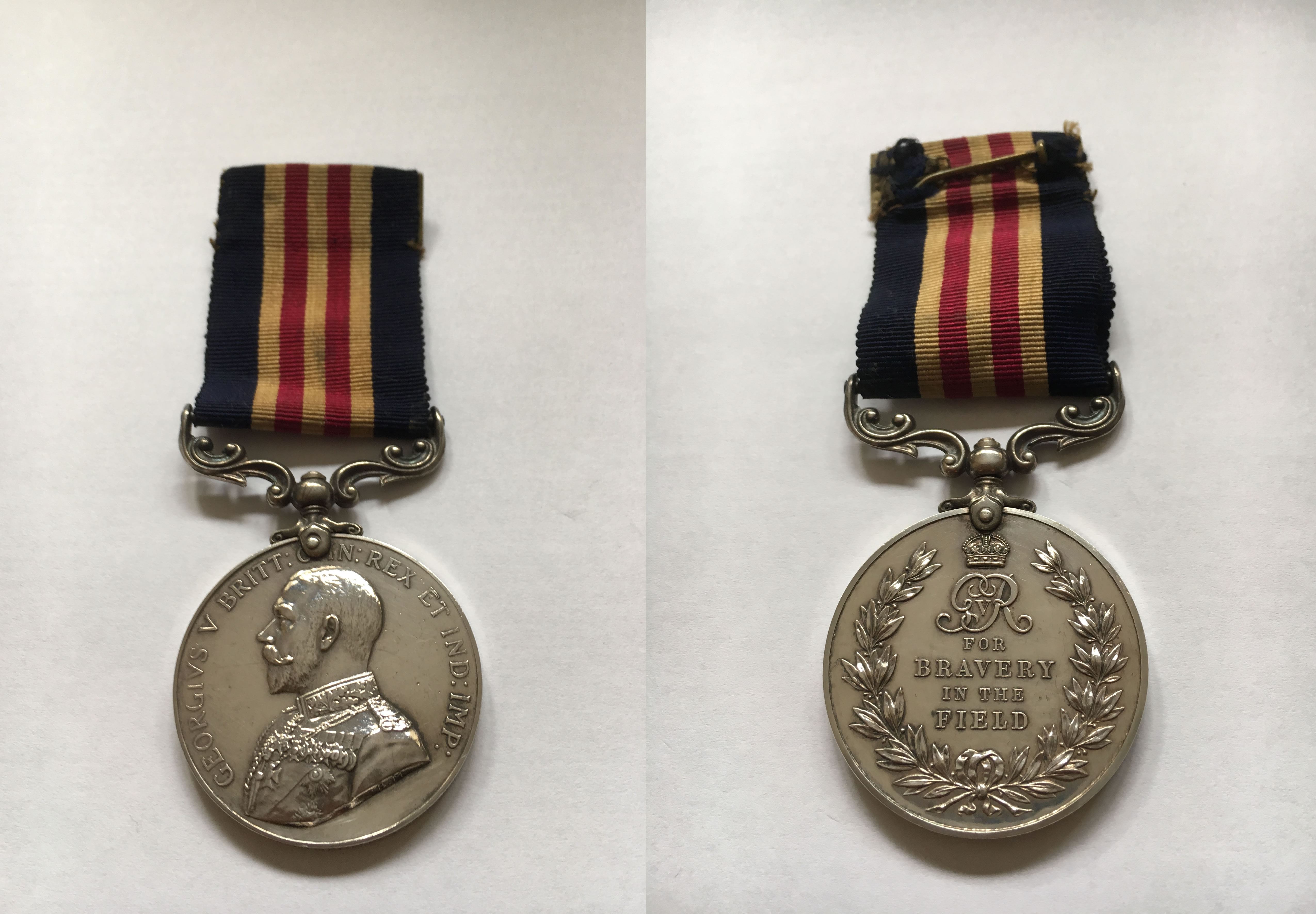
Up at 7 o’clock. Went up on the car to spoil bank on working party and stayed until about 3 o’clock. Rode down on two lorries. Ernie waiting for me. Harry Bascombe looked after him and got him tea. Ernie stayed to the beginning of the Y M service. He was wearing the Military Medal. I set him up the way back to the brasserie, and we talked all about my leave and all the rest of it.
Saw Ernie first thing after leave and he was wearing the Military Medal.
3 November 1917; Saturday
Up about 7 o’clock. On fatigue all day [“morning” written above, but “day” not erased]. Got pass to go and see Ernie in the afternoon. Walked to Dikbush and when I found the place he wasn’t there. Got tea with them and left about 5 o’clock, after speaking on the telephone to Ernie. Walked back by La Clytte and called in to Y M C A. Got back about 8 and wrote to Charlie but didn’t get letter finished. Warned for working party in the morning.
2 November 1917; Friday
Up at about 7 o’clock. On fatigue all day. Wrote part of a letter at night to Charlie. Called in at Y M.
1 November 1917; Thursday
Up at midnight. Breakfast 12.15. Paraded for rations 1.15. Fritz1 plane over and delayed for an hour. Marched to train 3 o’clock. Got into compartment with only one door. 12 hours on the journey. Arrived at Bailleul about 3 in the afternoon. Had dinner and got a lorry to Locre. Walked from there to Kemmel2 and arrived just after 4 o’clock. Commenced to write letter home, fine day, looked through letters received. Harvey and Holman up the line.
Arrived at Ambulance after leave.
31 October 1917; Wednesday
Up about 7 o’clock. Breakfast and then paraded. Dismissed until about 1 o’clock. Wrote a letter home and one to Everyman1. Got on the boat shortly after 1 o’clock. Very good crossing and I enjoyed it. Big escort both in the air and sea. Marched up to Saint Martin’s camp2 in time for tea. Detailed off. Spent part of the night in the Y M and sent off a field card. Reveille at midnight.
More on this letter to Everyman in a later entry. See also Everyman and Arthur Linfoot’s Library. ↩
“Saint Martin’s camp”: one of several army camps in and around Boulogne. The map shows this part of ALL’s journey, from Folkestone (A) to Saint-Martin (B). ↩
30 October 1917; Tuesday
Arrived at London at about 6 o’clock after a fairly good journey. I managed to get a bit sleep. A lot of sailors in the train and they were a jolly lot. Arrived at Folkestone – after crossing London – about 9 o’clock1. A strong wind and sea so we were put into billets on the quay. Wrote letter home and allowed in the town in the afternoon. Made a few purchases, sent off some postcards and had a nice little tea. Met Clifton† and the R F C men and went out again at night. Glorious sunset and bonny night. Slept pretty well. Had long talk with signal engineer. He has been recalled after only 36 hours’ leave.
The map shows this stage of ALL’s journey back to France from London (A) to Folkestone (B). ↩
29 October 1917; Monday
Up about 9 o’clock. Went up to see Mr Eaves1. Wrote to Harvey’s brother and wrote up diary.
[Diary reverts to pencil at this point – obviously written up after ALL’s return to France.]
Sister Annie2 called at night and we had a long argument on men – whether they are as good as parsons think they are or not. She stayed until 7 o’clock. I had supper and then we all went up to the station. I left by the 9.15. †Annie Freeman† at the station to see Teddie Tudor† off but he wasn’t going. †Dee Frere† and Hilda3 there. Called on Granny in the afternoon just after tea. Jack at the station too and Joe.
Left Sunderland 9.15 for Newcastle. Arrived Newcastle about 10 and left again after an hour4. Got good seat in the train.
Edward Eaves was a minister at the South Durham Street United Methodist Free Church. According to the diary, ALL had written to Mr Eaves twice, on 28 December 1916 and 28 May 1917, the latter shortly after Mr Mullens, another minister at the church, had died, presumably to offer condolences. Mr Eaves had officiated at Mr Mullens’ funeral. ↩
“Sister Annie” is also named as a mourner at the funeral of Mr Mullens on 23 May 1917. See also note on 28 December 1916. ↩
The map shows the first part of ALL’s journey back to France, from Sunderland (A) to London (C) on an overnight train, via Newcastle (B). ↩