Tag Archives: Chapel

Arthur Linfoot was a member of the South Durham Street United Methodist Free Church in Sunderland, and a regular church-goer elsewhere when not in Sunderland. He records his attendance at chapel and church services of many kinds throughout his diaries.

6 January 1918; Sunday

[Three lines of shorthand crossed out – apparently the next day’s entry.]

Up at 6 o’clock and on guard. Finished my turn at 10, but relieved the others from eleven. Finished guard at 6 o’clock. Went to special Newton1 thanksgiving service in the little chapel at night. Rather dull.


  1. Joseph Fort Newton, 1876-1950, Texan Baptist minister; studied at Harvard under William James (elder brother of Henry James), served at London’s City Temple 1916-20, travelled widely in British Isles, gained international fame through his sermons. See also 12 and 18 January entries. 

30 December 1917; Sunday

Up about 7.30. Woke up by heavy gunfire and German shells bursting near. Heard that the Germans had attacked and taken two lines of trenches. Saw a few German prisoners. On fatigue all day. Went to a C of E service at night and it was very good. Commenced letter to Mr Eaves1 and then had a discussion about war and armies and all the rest of it. Turned in about 11 o’clock. Pulled out again about 12 to go up the line. About 30 of us altogether.


  1. Edward Eaves was a minister at the South Durham Street United Methodist Free Church in Sunderland where ALL had been a member before joining the RAMC. See also all diary entries tagged Eaves

4 November 1917; Sunday

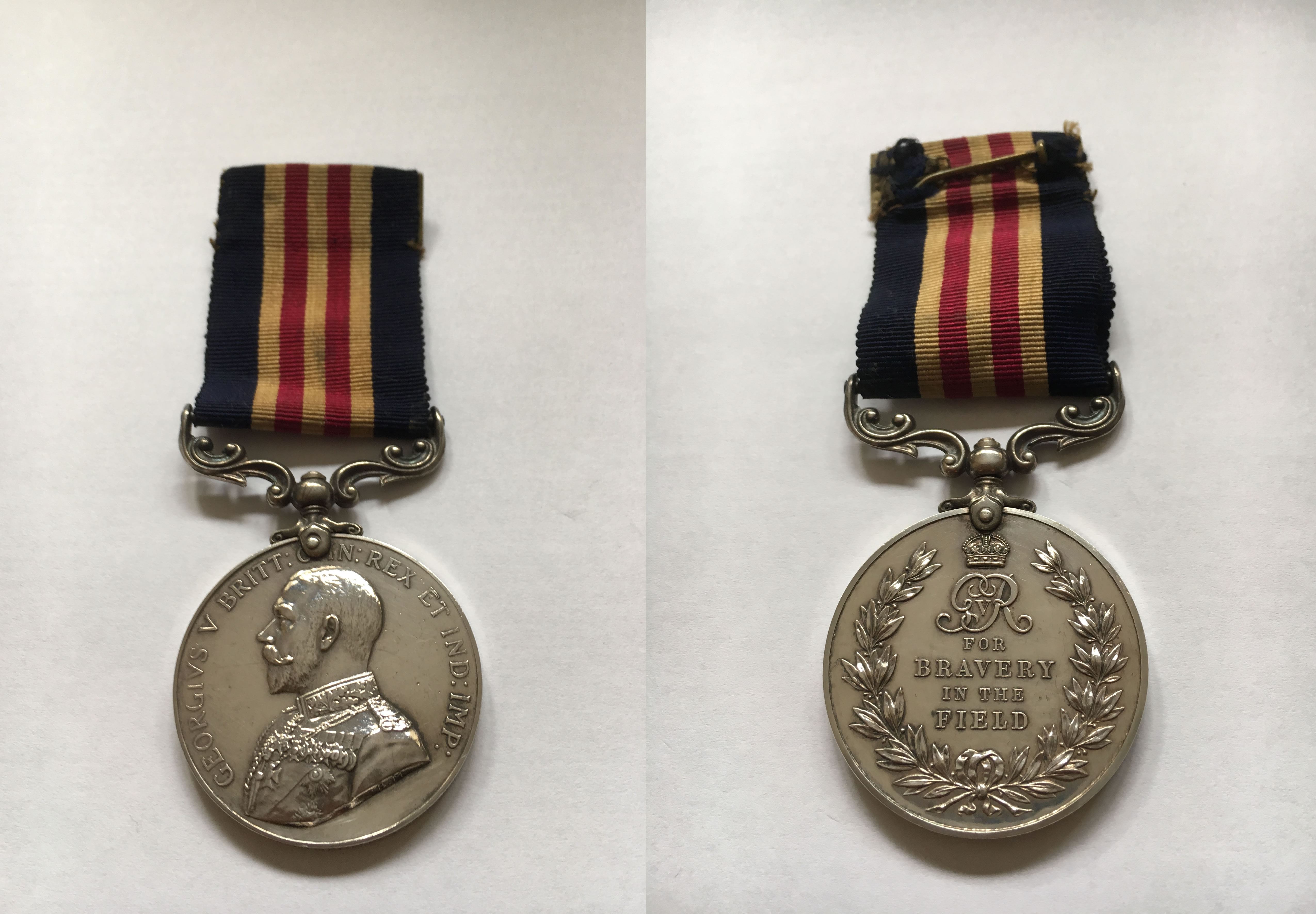
Military Medal
Ernie Linfoot’s military medal. Image courtesy of Patricia Munn. Click or tap to enlarge.

Up at 7 o’clock. Went up on the car to spoil bank on working party and stayed until about 3 o’clock. Rode down on two lorries. Ernie waiting for me. Harry Bascombe looked after him and got him tea. Ernie stayed to the beginning of the Y M service. He was wearing the Military Medal. I set him up the way back to the brasserie, and we talked all about my leave and all the rest of it.

Saw Ernie first thing after leave and he was wearing the Military Medal.

27 October 1917; Saturday

Up as usual. Walked round the town in the afternoon. Went down to the chapel at night and met a few people including Willie Whittaker senior1.


  1. Willie Whittaker senior was the father of ALL’s friend from chapel, Willie Whittaker junior, whose death is noted retrospectively in the diary entry for 22 October. It is very likely that Willie Whittaker senior did not yet know about the death of his son – ALL himself only found out after his return to France, on 8 November. 

14 October 1917; Sunday

Up about 7.30. Finished fatigues early in the afternoon. Went to Dranoutre1 Y M service at night with Harvey and Corporal Mather. Very good service. Met some old Sheffield men there. There in the 917th Ambulance and Williams2 is sergeant-major.


  1. Dranoutre: Flemish Dranouter (B), mid-way between Bailleul and Kemmel (A), Michelin map square I3. 

  2. Williams: Possibly, though not certainly, the same Williams as is mentioned for the first time in the diary entry for ALL’s very first day in Sheffield in 1915.

    “Other two recruits with me. A Scotsman and a Sunderland lad called Williams … Went into town at night with Williams.”

    Williams is mentioned on only one further occasion during ALL’s time in Sheffield, 12 August 1915

9 September 1917; Sunday

Up at 6.30. Marched off at 7.30. Arrived at the job about 9 o’clock. Our work is to dig out a dugout which is behind the old German second line and mine craters1. Worked until after 4 o’clock. Very hot work. Fritz2 shelled there a good bit on the sides. Walked over to the Ridge Wood Y M but were too late for the service.


  1. Presumably the Messines craters. 

  2. Fritz: a name given to German troops by the British and others in the First and Second World Wars.